English
 Español

Need Help Now? Call Us!
+86-573-8553-5198
Need Help Now? Call Us!
+86-573-8553-5198
Our team proudly offers an on-time guarantee and a 100% customer satisfaction guarantee.
Contact Online


Content
The deployment of Stainless Steel Spacer Strips For Heat Exchanger represents a critical advancement in thermal management engineering. These precision-engineered components are strategically positioned within shell-and-tube or spiral-wound configurations to modify fluid pathways, disrupt laminar boundary layers, and promote turbulent mixing. By introducing controlled geometric interruptions, spacer strips fundamentally alter the hydrodynamic profile of working fluids, converting stagnant flow zones into highly active convection regions. This structural intervention directly increases the Reynolds number within the tube bundle, forcing the fluid to engage more thoroughly with heat transfer surfaces. The resulting enhancement in thermal conductivity reduces the required surface area for equivalent duty, allowing engineers to downsize equipment footprints while maintaining or exceeding design specifications. Proper integration of these components requires a thorough understanding of fluid mechanics, pressure drop limitations, and thermal expansion coefficients to avoid unintended flow channelling or excessive pump head requirements.
Fluid velocity distribution within heat exchange networks directly dictates overall thermal efficiency. Conventional smooth-tube arrangements often suffer from velocity maldistribution, where peripheral tubes receive disproportionate flow while central cores experience stagnation. Deformed spacer strips act as flow directors, redirecting high-velocity streams toward underperforming zones and equalizing residence time across the entire bundle. The strategic placement of these metallic profiles generates secondary flow patterns, including vortices and cross-stream mixing, which continuously strip away thermal boundary layers that otherwise act as insulating barriers. This convective augmentation ensures that both shell-side and tube-side media maintain optimal heat transfer coefficients throughout extended operational cycles. Engineers must carefully calculate the pitch and orientation of each strip to balance thermal gains against allowable pressure differentials, ensuring that system pumps operate within their most efficient curves without exceeding motor rating limits.
Flow-induced vibration remains one of the most destructive failure mechanisms in tubular heat exchangers, particularly in high-velocity gas applications or two-phase flow environments. Unrestrained tube spans are susceptible to fluidelastic instability, which occurs when periodic vortex shedding synchronizes with the natural frequency of the tube structure. Over time, this resonance generates micro-fatigue cracks at baffle contact points, leading to catastrophic leakage and unplanned shutdowns. Precision-formed spacer strips function as intermediate mechanical supports, significantly reducing effective span lengths and raising the critical flow velocity threshold required to initiate oscillatory motion. By rigidly anchoring adjacent tubes while maintaining precise clearance tolerances, these components dissipate kinetic energy and prevent cross-tube collision. The damping effect simultaneously reduces airborne and structure-borne acoustic emissions, creating quieter operational environments that comply with occupational health standards and prevent noise-induced equipment degradation in surrounding control instrumentation.
The chemical composition of spacer components must align precisely with the aggressive nature of process streams to prevent premature degradation and maintain dimensional stability. Austenitic stainless steel grades, particularly 304L and 316L, dominate industrial applications due to their inherent passivation layers and exceptional resistance to chloride-induced stress corrosion cracking. During manufacturing, cold-rolling and precision stamping processes must be carefully controlled to avoid introducing tensile residual stresses that could compromise corrosion resistance in acidic or caustic environments. Surface finishing procedures, including electrolytic polishing and chemical pickling, restore the protective chromium oxide layer that naturally forms during fabrication. These treatment steps eliminate microscopic crevices where aggressive ions could accumulate and initiate localized pitting. When processing media containing sulfur compounds, high-chloride seawater, or organic acids, engineers often specify duplex or super-austenitic alloys to ensure long-term structural integrity without compromising the thermal conductivity required for efficient heat exchange operations.
Elevated operating temperatures introduce significant metallurgical challenges that require careful material validation and design compensation. Stainless steel spacer strips must retain their yield strength and elastic modulus when exposed to continuous thermal cycling between ambient conditions and peak process temperatures exceeding four hundred degrees Celsius. At elevated thresholds, carbide precipitation and sensitization can occur if improper heat treatments or extended exposure durations are encountered during service. Manufacturers address these risks by utilizing low-carbon variants and implementing solution annealing protocols that redistribute carbon atoms uniformly throughout the austenitic matrix. This microstructural optimization prevents grain boundary embrittlement and maintains fracture toughness under mechanical loading. Additionally, the differential thermal expansion between spacer components, tube bundles, and shell housings must be accommodated through strategic clearance allowances or flexible mounting configurations that prevent thermal stress accumulation during startup and cooldown sequences.
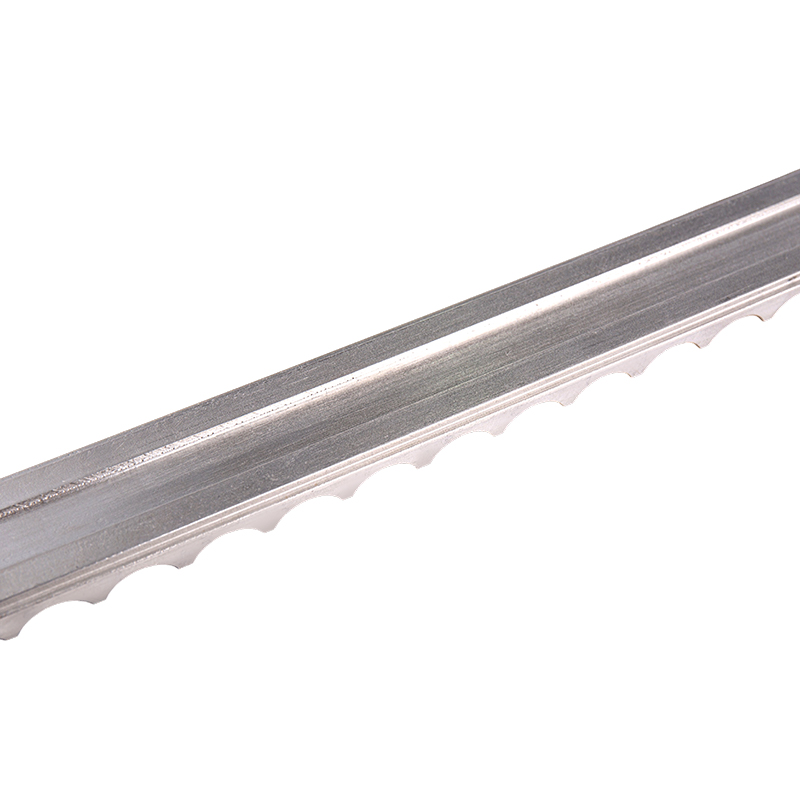
Standardized spacer profiles rarely satisfy the complex hydrodynamic requirements of specialized industrial processes. Engineering teams frequently collaborate with component manufacturers to develop proprietary cross-sectional shapes that address unique flow characteristics, fouling tendencies, or space constraints. Corrugated, wavy, or twisted profiles generate enhanced turbulence while minimizing pressure penalties, making them ideal for viscous fluids or low-velocity applications. Angled or staggered configurations promote cross-flow mixing in multipass arrangements, effectively eliminating thermal stratification and temperature cross issues. For services prone to particulate deposition, spacers with open-channel designs facilitate continuous self-cleaning action as fluid streams sweep through the bundle, reducing maintenance frequency and preserving design heat transfer coefficients throughout the equipment lifecycle. Custom tooling and computer numerical control forming processes enable rapid prototyping and precise dimensional replication, ensuring that every installed strip matches the engineered flow simulation parameters without deviation.
| Profile Geometry | Primary Application | Flow Characteristics | Pressure Drop Impact |
| Corrugated Wave | Viscous Liquid Processing | High Turbulence Generation | Moderate |
| Flat Rigid Strip | High-Pressure Gas Duty | Vibration Suppression Focus | Minimal |
| Twisted Helical | Two-Phase Flow Systems | Phase Mixing Enhancement | High |
| Open Channel | Fouling-Prone Media | Particulate Flushing Action | Low |
The mechanical performance and longevity of spacer-enhanced heat exchangers depend entirely on precise assembly procedures and disciplined maintenance routines. Improper insertion techniques can deform tube bundles, misalign flow channels, or compromise sealing interfaces before the unit ever enters service. Technicians must follow engineered sequencing diagrams that specify insertion order, alignment markers, and torque specifications for retaining hardware. All components should be cleaned with approved solvents and inspected for burrs, dimensional deviations, or surface defects prior to installation. During bundle insertion into the shell, guide rails and alignment sleeves prevent scraping against internal walls that could scratch protective coatings or damage precision-machined sealing surfaces. Post-assembly verification includes hydrostatic testing, dimensional clearance checks, and flow pattern validation to confirm that the installed configuration matches the thermal design simulation without deviation.
Accurate positioning of spacer strips within the tube matrix requires specialized tooling and trained personnel familiar with thermal expansion compensation strategies. Each strip must be seated flush against adjacent tubes without inducing point loading that could initiate stress concentration zones. Alignment pins or laser-guided positioning systems ensure consistent pitch distribution throughout the entire bundle length, eliminating flow bypass channels that would otherwise reduce thermal efficiency. During multi-pass configurations, transition zones between header connections and main tube sections require carefully calculated spacer spacing to accommodate directional flow changes without generating excessive turbulence or pressure spikes. Engineers often incorporate removable access panels or modular baffle sections to facilitate future inspection without requiring complete bundle extraction, significantly reducing maintenance downtime and operational costs across long-term service intervals.
Successful implementation begins with comprehensive evaluation of process parameters, fluid characteristics, and long-term operational objectives. Thermal duty calculations must account for variable inlet temperatures, seasonal ambient fluctuations, and potential future capacity expansions that could alter flow regimes. Engineers should conduct computational fluid dynamics simulations to model turbulence intensity, pressure drop distribution, and thermal gradient patterns across proposed spacer layouts. These predictive analyses identify optimal profile geometries, material grades, and spacing intervals that maximize heat transfer coefficients while staying within pump capacity and structural integrity limits. Collaboration with component manufacturers during the specification phase ensures that custom tooling, material certifications, and quality assurance protocols align precisely with industry standards and project requirements.
Process stream properties fundamentally dictate spacer selection criteria and installation density. High-viscosity fluids require enhanced turbulence generation to overcome laminar flow resistance, necessitating aggressively profiled strips with increased surface area projection. Conversely, clean liquid services with low fouling potential benefit from streamlined profiles that minimize pressure penalties while maintaining adequate tube support. Gas-phase applications demand careful consideration of compressibility effects and sonic velocity limits, as excessive flow acceleration can trigger choked flow conditions or induce acoustic resonance. Two-phase systems involving condensation or evaporation require spacer configurations that promote phase separation, prevent liquid pooling, and maintain consistent heat transfer across varying vapor quality fractions. By systematically matching geometric profiles to fluid behavior characteristics, engineers achieve reliable thermal performance, extended maintenance intervals, and predictable operational economics throughout the equipment lifecycle.
Products
Contact info.
+86-573-8553-5198
+86-136-1655-8299
+86-573-8553 5198
No. 207, Chuangye Road, Zhapu Town, Pinghu City, Zhejiang Province, China
QR Code
 Forged Stainless Steel Flanges Suppliers