English
 Español

Need Help Now? Call Us!
+86-573-8553-5198
Need Help Now? Call Us!
+86-573-8553-5198
Our team proudly offers an on-time guarantee and a 100% customer satisfaction guarantee.
Contact Online


Content
A petrochemical plant in Southeast Asia needed to connect a legacy DIN-standard valve to a newer ASME pipeline. The bolt circles didn't align. The pressure rating didn't match. A standard adapter wasn't going to cut it — and a system shutdown to redesign the piping would cost far more than the flange itself. The solution was a non-standard flange, custom-engineered to bridge the gap.
This scenario plays out across industries every day. Standard flanges — governed by codes like ASME B16.5, DIN 2633, and JIS B2220 — are designed for typical, predictable conditions. But real-world piping systems are rarely typical. Equipment built to different international standards, legacy systems that predate modern codes, and operating environments that exceed standard pressure or temperature ratings all create situations where off-the-shelf flanges simply cannot perform.
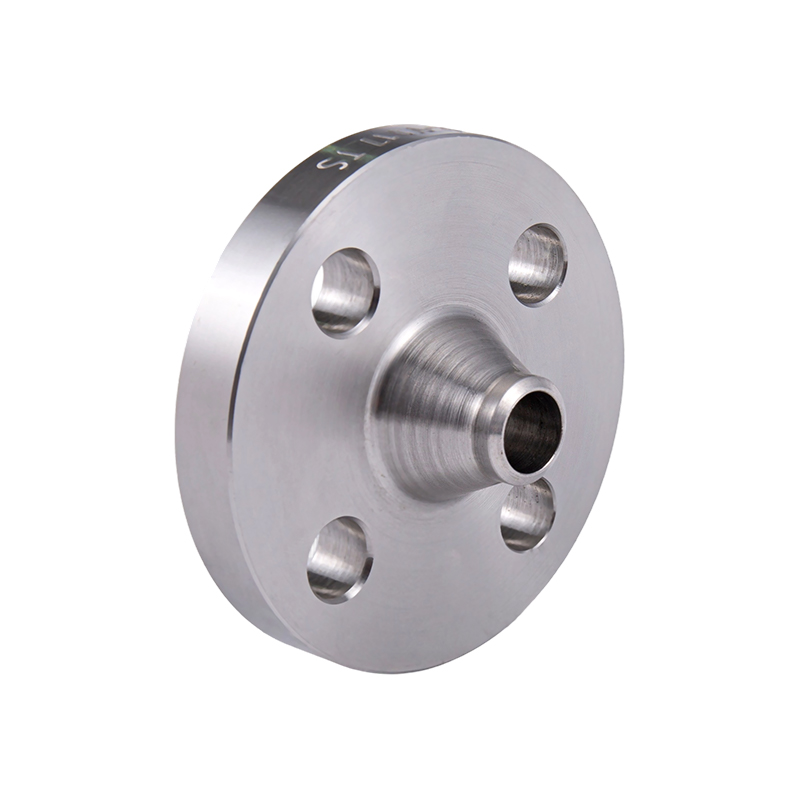
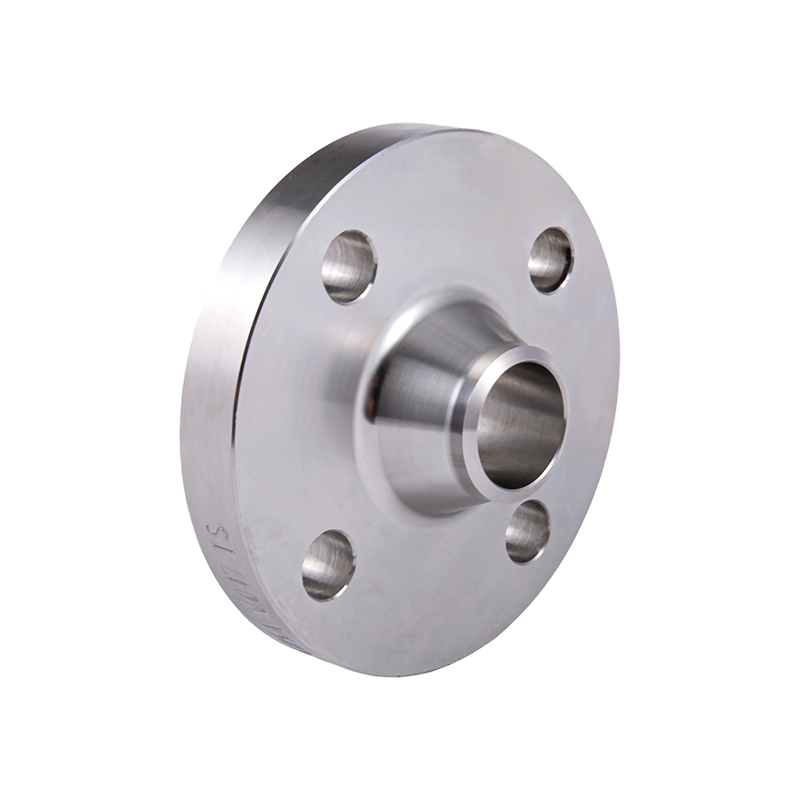
Non-standard flanges exist to solve exactly these problems. They are custom-engineered components designed to meet requirements that fall outside the dimensional and performance boundaries of any recognized standard. For procurement managers and project engineers working on complex or specialized installations, understanding when and how to specify them is a critical skill.
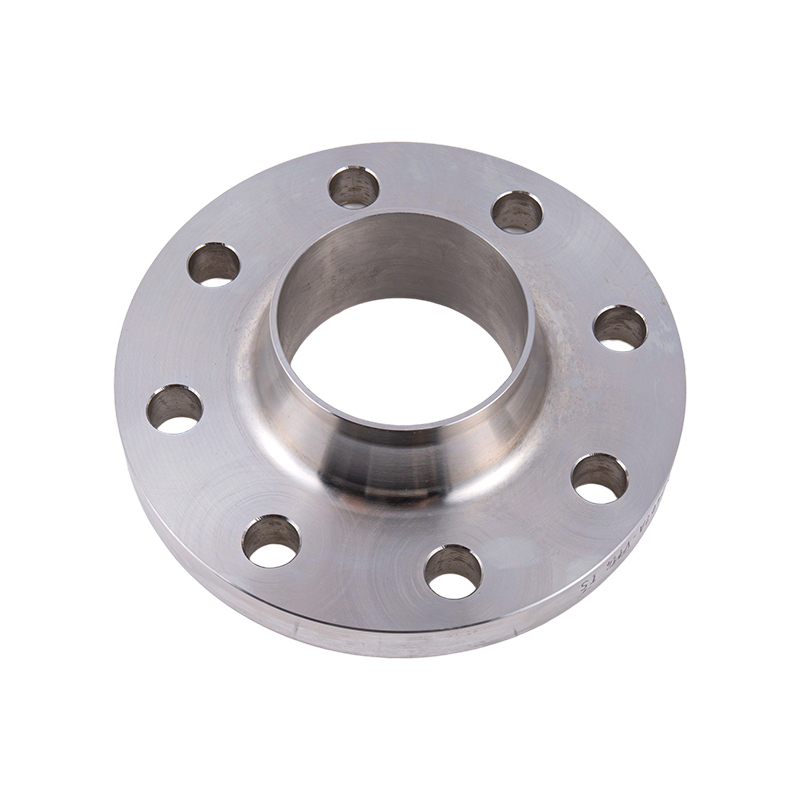
A flange is considered non-standard when any of its defining characteristics — outer diameter, bolt circle, pressure rating, facing type, bore size, or material — deviate from the published tables of recognized international standards such as ASME, DIN, EN, or JIS.
This deviation is not arbitrary. Non-standard flanges are deliberately engineered to solve a specific problem: connecting mixed-standard systems, accommodating unique equipment geometry, surviving extreme operating conditions, or meeting dimensional constraints that no catalog product can satisfy. Unlike standard flanges, which are manufactured to fixed dimensional templates and can be purchased off the shelf, non-standard flanges must be designed and machined to order — typically from engineering drawings or detailed technical specifications provided by the buyer.
The term "non-standard" does not mean unregulated. These flanges are still designed and manufactured under rigorous engineering codes. What changes is the dimensional starting point: instead of referencing a standard table, the engineer calculates the required geometry from first principles, then produces a component built specifically for that application.
Non-standard does not mean uncalculated. In pressure vessel and piping applications, non-standard flanges are typically designed in accordance with ASME Section VIII Division 1, Mandatory Appendix 2, which provides the calculation methodology for bolted flange connections — covering gasket seating loads, hydrostatic end forces, hub proportions, and allowable flange stresses. For more demanding applications, ASME VIII Division 2, Part 4.16 applies a design-by-analysis approach based on maximum distortion energy criteria, which often results in lighter flanges with more precisely controlled stress distributions.
The choice between Div.1 and Div.2 methods depends on the specific operating conditions and the level of analysis required. Both approaches require the engineer to calculate for two governing conditions — the operating case and the gasket seating case — with the more severe condition controlling the final design. What this means in practice is that every non-standard flange should come with documented calculations, not just a drawing. Buyers should always request design documentation alongside material certifications when procuring these components.
For large-diameter, low-pressure flanges — typically those exceeding 60 inches (1,524 mm) inside diameter at pressures up to 100 psig — additional analysis beyond the standard Appendix 2 methodology is required, including a check for flange rotation. This is a detail that separates experienced non-standard flange manufacturers from those simply machining parts to a sketch.
Ordering a non-standard flange without a complete technical specification is a common source of project delays and fitment failures. Before approaching a supplier, procurement teams should be prepared to define the following parameters clearly:
If the exact parameters are not yet known, a reputable supplier with engineering support can assist in developing the specification from a description of the application and operating conditions. What is not acceptable is proceeding to manufacturing with an incomplete specification.
Oil and gas is the largest single market for non-standard flanges. Subsea equipment, wellhead assemblies, high-pressure process lines, and the integration of equipment from multiple international vendors all generate demand for custom-engineered connections. In offshore environments, the cost of a connection failure is measured not just in repair costs but in lost production, regulatory exposure, and safety risk.
Power generation facilities — particularly those involving steam turbines, heat exchangers, and high-temperature process lines — frequently require flanges with dimensions or pressure ratings that exceed the B16.5 Class 2500 ceiling. Turbine housings and pressure vessel nozzles are common applications where non-standard designs are the only viable option.
Chemical processing plants work with corrosive, high-temperature, or high-purity media that demand flanges in materials well outside the standard carbon steel product lines — duplex stainless, Inconel, Hastelloy, and titanium. These materials are available in standard flanges only in limited sizes and ratings; for anything outside those parameters, custom machining is the only path.
Marine engineering and shipbuilding present unique dimensional challenges. Ship-mounted equipment is often built to manufacturer-specific geometries, and the compact layout of marine piping systems frequently requires non-standard connection dimensions that catalog products cannot accommodate.
Heavy equipment and OEM manufacturing is a growing segment. Original equipment manufacturers increasingly design proprietary hydraulic systems, structural connections, and process skids that require flange interfaces unique to their product architecture. For these buyers, non-standard flanges are not a workaround — they are a designed-in feature.
The commercial case for non-standard flanges only holds if the supplier can actually deliver what the specification requires. A lower unit price means nothing if the flange fails to seal, arrives out of tolerance, or comes without the documentation needed for regulatory compliance. These are the criteria that separate qualified suppliers from those simply offering low prices on complex parts.
Engineering capability is the first filter. A qualified supplier should be able to review a drawing or application description, perform or review the Appendix 2 (or equivalent) calculations, and flag potential manufacturability issues before production begins. Suppliers that simply quote a price from a sketch without engineering review are a risk.
CNC machining precision is the second. Non-standard flanges must be machined to tight tolerances — bolt hole PCD accuracy within ±0.2 mm, critical sealing face dimensions within ±0.05 mm, and bore alignment that ensures the flange will not induce stress on the connected pipe. This requires capable CNC turning and milling equipment, not just a lathe.
Material traceability is non-negotiable for pressure-containing components. Every heat of material used in a non-standard flange should be traceable to a mill certificate that confirms chemical composition and mechanical properties. EN 10204 3.1 certification is the industry-standard documentation format.
Dimensional inspection reporting provides objective confirmation that the finished flange matches the drawing. For low-volume, high-value parts, a coordinate measuring machine (CMM) report is the appropriate level of verification. Suppliers who resist providing this documentation should be treated with caution.
Small-order flexibility matters because non-standard flanges are rarely ordered in large quantities. A supplier structured for high-volume standard product manufacturing is often poorly suited to low-MOQ custom work. Look for suppliers who explicitly support prototype and small-batch production with reasonable lead times — and who can provide 3D CAD modeling support if your design is still at the development stage.
Products
Contact info.
+86-573-8553-5198
+86-136-1655-8299
+86-573-8553 5198
No. 207, Chuangye Road, Zhapu Town, Pinghu City, Zhejiang Province, China
QR Code
 Forged Stainless Steel Flanges Suppliers