English
 Español

Need Help Now? Call Us!
+86-573-8553-5198
Need Help Now? Call Us!
+86-573-8553-5198
Our team proudly offers an on-time guarantee and a 100% customer satisfaction guarantee.
Contact Online


Content
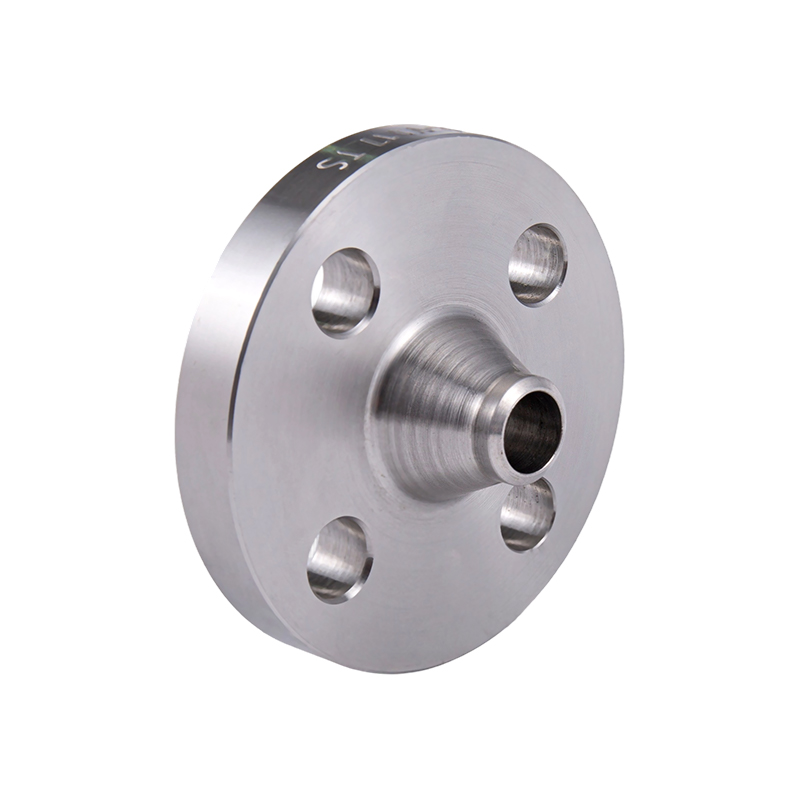
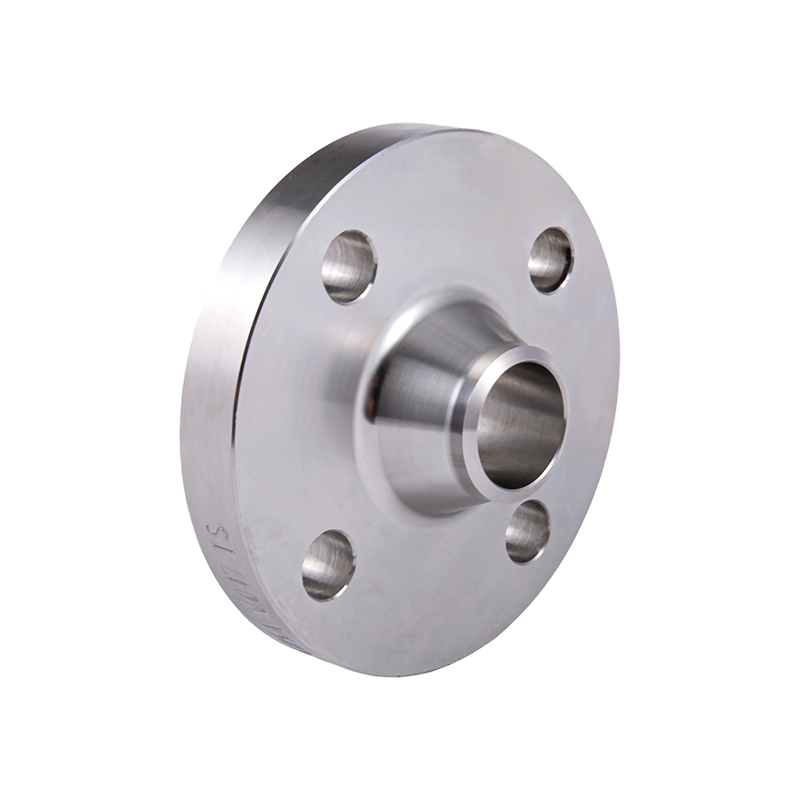
Forging and casting dominate high-volume flange production for good reason — they are fast and economical when the same geometry is repeated thousands of times. But custom flanges are, by definition, not high-volume standard items. A project engineer specifying a 48-inch duplex stainless flange with a non-standard bolt pattern and a ring joint face is not going to find that on a shelf. That flange gets machined — and the only process that can consistently hold the tolerances required for pressure-containing custom components is CNC machining.
CNC turning and milling centers allow manufacturers to produce flanges from any machinable alloy, at virtually any diameter within their equipment range, with dimensional accuracy that manual or semi-automated machining cannot reliably achieve. For custom flanges, where there is often no second chance to get the geometry right before the part reaches the installation site, that accuracy is not a selling point — it is a minimum requirement.
The other factor is documentation. A well-run CNC machining operation generates a complete record of the production process: the program used, the tooling, the in-process measurements, and the final dimensional inspection data. For buyers who need to demonstrate compliance with pressure equipment regulations or quality management systems, this traceability is as important as the flange itself.
The scope of customization available in CNC flange manufacturing is broader than most buyers initially expect. The major variables that can be independently specified include:
Buyers frequently encounter claims about "tight tolerances" in CNC flange marketing, but the numbers behind those claims vary significantly between suppliers. For critical pressure-containing flanges, the relevant tolerances are not interchangeable — each one directly affects how the flange performs in service.
Bolt hole PCD accuracy is one of the most practically important dimensions. A deviation of more than ±0.2 mm in the pitch circle diameter can prevent the flange from aligning with its mating counterpart on-site — a problem that is expensive to diagnose and even more expensive to correct mid-installation. Qualified CNC facilities should be able to hold PCD to within ±0.2 mm as a routine capability.
Sealing face flatness and surface roughness determine whether the gasket can achieve a reliable, leak-free seal. For critical mating surfaces, dimensional tolerance should be controlled within ±0.05 mm, and surface roughness should be specified in Ra (micrometers) and verified against the gasket manufacturer's requirements. A ring joint face demands different roughness parameters than a raised face with a soft gasket.
Bore alignment affects the stress distribution at the pipe-to-flange weld. A bore that is off-center relative to the bolt circle creates eccentric loading that concentrates stress at the weld root — not a failure that announces itself immediately, but one that shortens service life under cyclic loading.
When evaluating suppliers, ask for specific tolerance capabilities in writing, not general assurances. A supplier that can provide CMM inspection reports from recent comparable projects is demonstrating, not just claiming, their capability.
The gap between submitting a drawing and receiving a usable flange involves more steps than most buyers realize — and the quality of each step affects the final result. Understanding the process helps procurement teams ask the right questions and set realistic expectations for lead time and documentation.
Design for manufacturability (DFM) review. Before any material is ordered, a capable supplier reviews the drawing for features that may be difficult or impossible to machine as specified — internal corner radii that are too tight, surface finish requirements that conflict with available tooling, or tolerances that are tighter than necessary for the application and therefore drive cost without adding value. This review should result in a written feasibility confirmation, not just a price.
Raw material procurement and PMI. For alloy and stainless flanges, raw material should be sourced from certified mills with full traceability to heat number. Before production begins, positive material identification (PMI) using X-ray fluorescence (XRF) or optical emission spectrometry confirms that the material matches the specification. This step costs little and prevents the kind of material mix-up that can result in a catastrophic in-service failure.
CNC turning and milling. The flange blank — whether a forged ring, a rolled ring, or a plate cut — is mounted on a CNC vertical or horizontal lathe for facing, boring, and hub turning. Bolt holes are then drilled and, where required, tapped on a CNC milling center. Complex sealing face geometries such as RTJ grooves or Lens Ring profiles require multi-axis machining capability.
In-process and final dimensional inspection. Critical dimensions are checked during machining, not just at the end. Final inspection using a coordinate measuring machine (CMM) generates a dimensional report that can be submitted to the end client or third-party inspector as objective evidence of conformance.
Documentation package. The completed flange should ship with a minimum documentation set: the material test certificate (MTC) to EN 10204 3.1, the dimensional inspection report, any NDE reports, heat treatment records if applicable, and a certificate of conformance. Buyers specifying flanges for pressure equipment covered by PED, ASME, or other regulatory frameworks should confirm the required documentation scope before production begins.
Petrochemical and refining operations place the most demanding requirements on custom CNC flanges. High-pressure, high-temperature process lines handling corrosive hydrocarbons require flanges in duplex or super duplex stainless steel with RTJ sealing faces and full material traceability. In these environments, the cost of a flange failure — in lost production, environmental liability, and safety risk — dwarfs the cost of the component itself.
Offshore oil and gas adds the complexity of subsea and splash-zone environments, where standard material grades corrode at accelerated rates. Titanium and super duplex flanges, machined to tight tolerances for ROV-assisted installation, are common requirements. The dimensional precision of CNC machining is particularly valuable here, since subsea alignments cannot be corrected by shimming or forcing.
Power generation facilities use custom CNC flanges extensively in turbine nozzle connections, heat exchanger shells, and high-temperature steam piping. These applications often combine large diameters with high-pressure ratings that place them outside the B16.47 standard range, requiring full Appendix 2 design calculations and corresponding documentation.
Heavy equipment OEMs design custom flanges into hydraulic manifolds, structural connections, and proprietary skid systems. For these applications, the priority is geometric repeatability across a production batch — and CNC machining is the only process that can reliably deliver it at low-to-medium volumes without the tooling investment that closed-die forging requires.
The number of suppliers claiming CNC flange capability has grown substantially, which makes meaningful differentiation harder for buyers. These are the criteria that matter most when evaluating a potential manufacturing partner for custom flange work.
Engineering support, not just machining. A supplier that can review your drawing, flag DFM issues, and assist in developing a specification from an application description is a partner. One that simply quotes a price from a PDF and starts cutting is a subcontractor. For non-standard flange work, the former is almost always the right choice.
Demonstrated material capability. Ask specifically about experience with the materials your application requires. Machining duplex stainless steel is not the same as machining carbon steel — the tooling, cutting parameters, and heat management are different. A supplier without documented experience in your required alloy is a risk, regardless of their general CNC capability.
Transparent quality documentation. Qualified manufacturers provide CMM reports, MTCs, and NDE results as a standard part of the delivery package, not as premium add-ons. If a supplier treats documentation as optional or extraordinary, that tells you something about how they view quality assurance.
Flexible minimum order quantities. Custom flanges are rarely ordered in large batches. A manufacturer set up for high-volume standard production will struggle with the setup economics of a two-piece prototype order. Look for suppliers who explicitly support small-batch and single-piece production, with lead times that reflect that capability.
Third-party inspection readiness. For flanges destined for pressure equipment covered by regulatory frameworks, the manufacturer should be comfortable hosting third-party inspectors and providing witness test access at agreed manufacturing milestones. Reluctance here is a meaningful warning sign.
Products
Contact info.
+86-573-8553-5198
+86-136-1655-8299
+86-573-8553 5198
No. 207, Chuangye Road, Zhapu Town, Pinghu City, Zhejiang Province, China
QR Code
 Forged Stainless Steel Flanges Suppliers