English
 Español

Need Help Now? Call Us!
+86-573-8553-5198
Need Help Now? Call Us!
+86-573-8553-5198
Our team proudly offers an on-time guarantee and a 100% customer satisfaction guarantee.
Contact Online


Heat exchangers are integral components in many industrial applications, ranging from power plants to HVAC systems, and are designed to efficiently transfer heat between two or more fluids. However, the efficiency of a heat exchanger is not solely dependent on the materials or the design of the heat exchanger itself. One often overlooked, yet critical component, is the heat exchanger spacer strip. These strips play a vital role in enhancing thermal efficiency by improving fluid distribution, preventing corrosion, and ensuring optimal heat transfer. In this article, we will explore the importance of heat exchanger spacer strips and their impact on the overall performance of heat exchangers.
Content
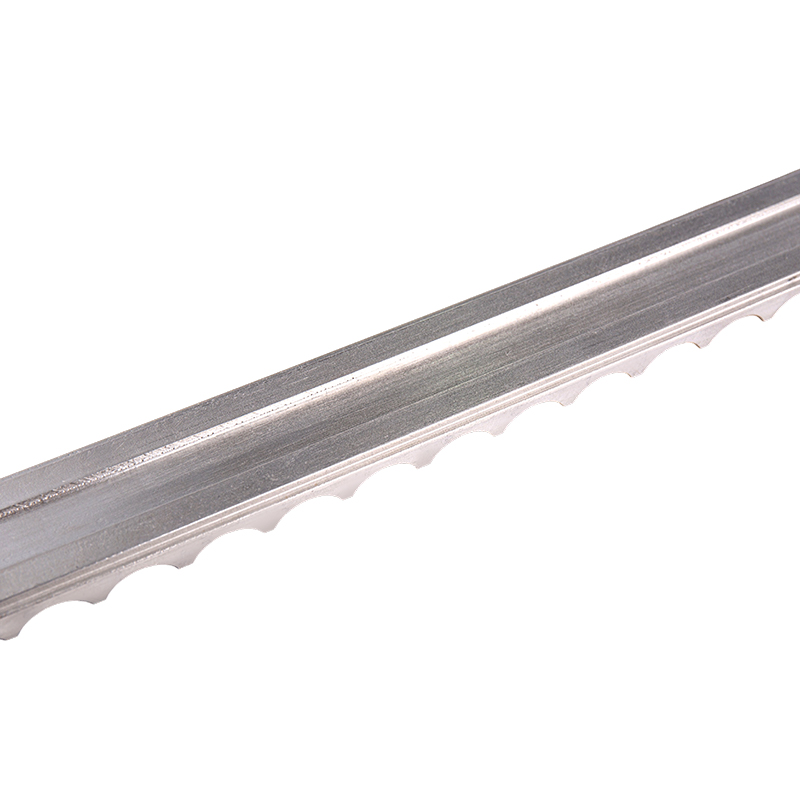
Heat exchanger spacer strips are thin, rigid materials that are inserted between the plates or tubes in a heat exchanger. They help to maintain the proper spacing between the surfaces where heat exchange occurs. By providing uniform spacing, spacer strips ensure that the fluids flow in a way that maximizes heat transfer efficiency and minimizes the potential for fouling and corrosion. These strips are commonly made from materials that are resistant to corrosion and can withstand high temperatures, such as stainless steel, polypropylene, or specialized polymers.
One of the primary roles of heat exchanger spacer strips is to optimize fluid flow, which directly affects the heat transfer process. Proper fluid flow is essential for maximizing thermal efficiency, and spacer strips help achieve this in the following ways:
Corrosion and fouling are two of the most common issues that affect the performance and longevity of heat exchangers. These problems can lead to reduced thermal efficiency, higher maintenance costs, and even premature failure of the equipment. Heat exchanger spacer strips play a critical role in preventing these issues:
The lifespan of a heat exchanger is directly related to its ability to maintain thermal efficiency and resist degradation due to corrosion or fouling. By preventing these issues, heat exchanger spacer strips help extend the life of the equipment:
Energy efficiency is one of the primary concerns when designing and maintaining heat exchangers, particularly in industries where energy consumption is high. Heat exchanger spacer strips contribute significantly to energy optimization:
Heat exchanger spacer strips are essential components that play a significant role in the thermal efficiency, durability, and overall performance of heat exchangers. By ensuring proper fluid distribution, preventing corrosion and fouling, and increasing the lifespan of the system, these strips contribute to both energy savings and cost reduction. Whether in industrial, HVAC, or power generation applications, the importance of heat exchanger spacer strips cannot be overstated, as they help optimize heat transfer and ensure the long-term reliability of the equipment.
Products
Contact info.
+86-573-8553-5198
+86-136-1655-8299
+86-573-8553 5198
No. 207, Chuangye Road, Zhapu Town, Pinghu City, Zhejiang Province, China
QR Code
 Forged Stainless Steel Flanges Suppliers