English
 Español

Need Help Now? Call Us!
+86-573-8553-5198
Need Help Now? Call Us!
+86-573-8553-5198
Our team proudly offers an on-time guarantee and a 100% customer satisfaction guarantee.
Contact Online


Content
Heat exchanger spacer strips are precision-engineered components designed to maintain consistent gaps between heat transfer plates or tubes. Their primary function is to ensure structural integrity while optimizing the flow of thermal fluids. By providing a fixed distance between surfaces, these strips prevent the collapse of flow channels under high-pressure conditions, ensuring that the calculated surface area for heat exchange remains constant and effective throughout the lifecycle of the equipment.
Beyond mere structural support, spacer strips play a vital role in fluid dynamics. They act as turbulence promoters, disrupting the laminar boundary layer of the moving fluid. This disruption increases the Reynolds number within the channel, leading to higher convective heat transfer coefficients. Consequently, the inclusion of correctly specified spacer strips can significantly reduce the overall footprint of a heat exchanger by achieving the same thermal duty with less surface area.
The choice of material for spacer strips is governed by the chemical nature of the fluids involved and the operating temperature of the system. Since these strips are in direct contact with both the heat transfer media and the primary plates, they must exhibit excellent corrosion resistance to prevent galvanic reactions. Common materials range from high-grade stainless steels for general industrial use to specialized alloys for aggressive chemical processing.
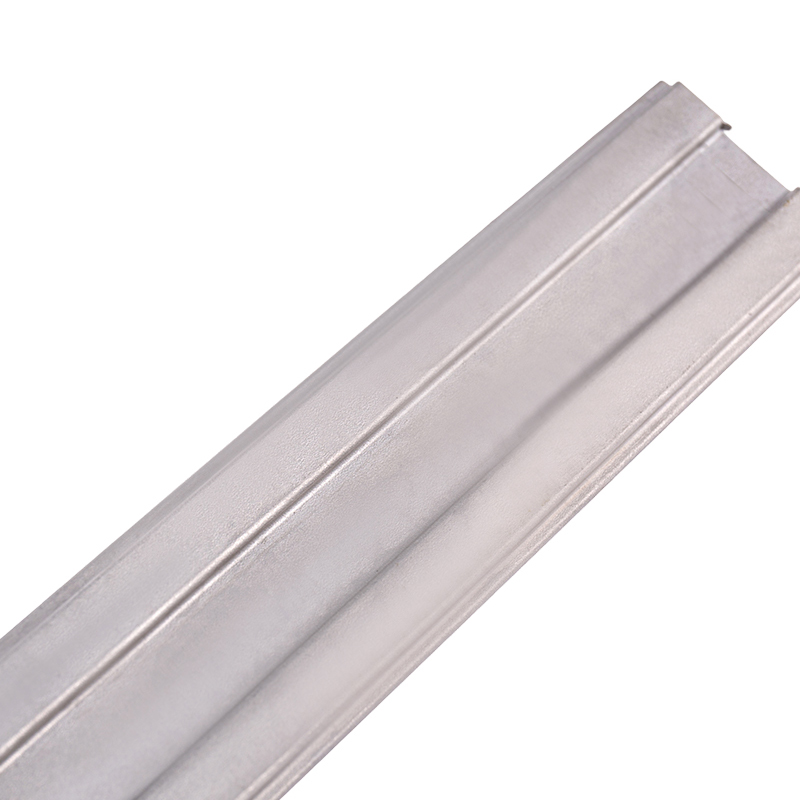
Precision is the most critical factor in the manufacturing of spacer strips. Even a minor deviation in thickness can lead to "channeling," where fluid bypasses certain areas of the heat exchanger, leading to hot spots and reduced efficiency. Engineers must specify tolerances that account for thermal expansion during operation to ensure the strips do not buckle or loosen.
| Feature | Requirement | Impact on Performance |
| Thickness Tolerance | +/- 0.02mm | Ensures uniform flow distribution |
| Edge Finish | Deburred / Smooth | Prevents erosion and plate damage |
| Flatness | < 0.1mm per meter | Facilitates easy assembly and sealing |
Proper installation of spacer strips is essential for the longevity of the heat exchanger. They must be securely positioned—often via spot welding or mechanical interlocking—to ensure they do not shift during high-velocity fluid surges. During routine maintenance or "clean-in-place" (CIP) procedures, these strips should be inspected for signs of scale buildup or erosion, which can impede flow and reduce thermal performance.
By focusing on high-quality spacer strips, facility managers can extend the mean time between failures (MTBF) and ensure that their thermal systems operate at peak energy efficiency, ultimately lowering operational costs and carbon footprints.
Products
Contact info.
+86-573-8553-5198
+86-136-1655-8299
+86-573-8553 5198
No. 207, Chuangye Road, Zhapu Town, Pinghu City, Zhejiang Province, China
QR Code
 Forged Stainless Steel Flanges Suppliers