English
 Español

Need Help Now? Call Us!
+86-573-8553-5198
Need Help Now? Call Us!
+86-573-8553-5198
Our team proudly offers an on-time guarantee and a 100% customer satisfaction guarantee.
Contact Online


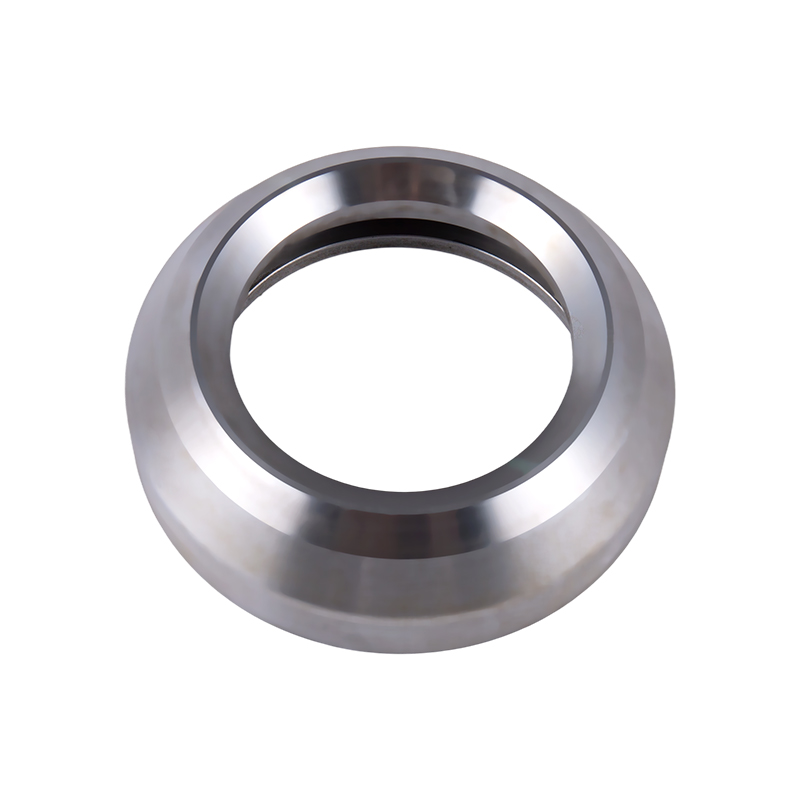
Pump nozzles, valve inlets, heat exchanger connections — these are the spots in a piping system where installation space runs out first. A standard flanged spool piece adds length that simply isn't available. That's the problem short type flanged pipe fittings are built to solve: they deliver the same bolted, leak-free connection as a full-length flanged fitting, but in a fraction of the face-to-face dimension. What makes material selection particularly important for this fitting type is that the compact geometry leaves less room for error — wall thickness, sealing surface flatness, and mechanical properties all carry greater consequence when there's less material to work with.
This guide covers the engineering case for stainless steel and carbon steel short type flanged fittings, how to choose between them, and what to look for in a forged fitting that will hold up across years of industrial service.
Content
A standard flanged spool piece is dimensioned with generous face-to-face length to accommodate installation tolerances and allow for gasket replacement without disturbing adjacent components. Short type flanged fittings reduce this dimension to the minimum required for a structurally sound flanged joint — typically 50 to 150 mm face-to-face, depending on nominal diameter and pressure class.
This shortened length has two practical effects. First, it resolves installation gaps that would otherwise require custom fabrication or awkward offset piping. Second, it reduces the number of connection points in a dense system — a shorter fitting between two flanged components means fewer gaskets, fewer bolt sets, and fewer potential leak paths.
The tradeoff is dimensional precision. Because short type flanged pipe fittings for compact piping installations leave less tolerance for misalignment, the flange faces must be machined to closer flatness tolerances than their longer counterparts, and the pipe body must be straight and concentric to within tighter limits. This is where manufacturing method — particularly forging versus casting — becomes decisive.
Applications where short type flanged fittings are regularly specified include:
Stainless steel is the default material for short type flanged fittings in corrosive service. The chromium content — a minimum of 10.5% by mass — forms a passive oxide layer that self-repairs when scratched, giving stainless steel its characteristic resistance to oxidizing acids, moisture, and chloride-bearing media.
For flanged fittings, two grades dominate industrial procurement:
Grade 304 / 304L offers broad corrosion resistance at moderate cost. It handles nitric acid, organic acids, food-grade media, and most water treatment chemicals reliably. The L designation (low carbon) reduces the risk of sensitization during welding — relevant for fittings that will be field-welded into service. Suitable for water treatment plants, food processing, pharmaceutical utilities, and general chemical service below 60°C with chloride levels under 200 ppm.
Grade 316 / 316L adds 2–3% molybdenum, which significantly improves resistance to chlorides and pitting corrosion. This is the correct specification for seawater systems, coastal installations, bleaching chemicals, sulfuric and hydrochloric acid service, and any application where 304 has shown pitting in service. The performance premium over 304 is modest in cost but substantial in service life in aggressive media.
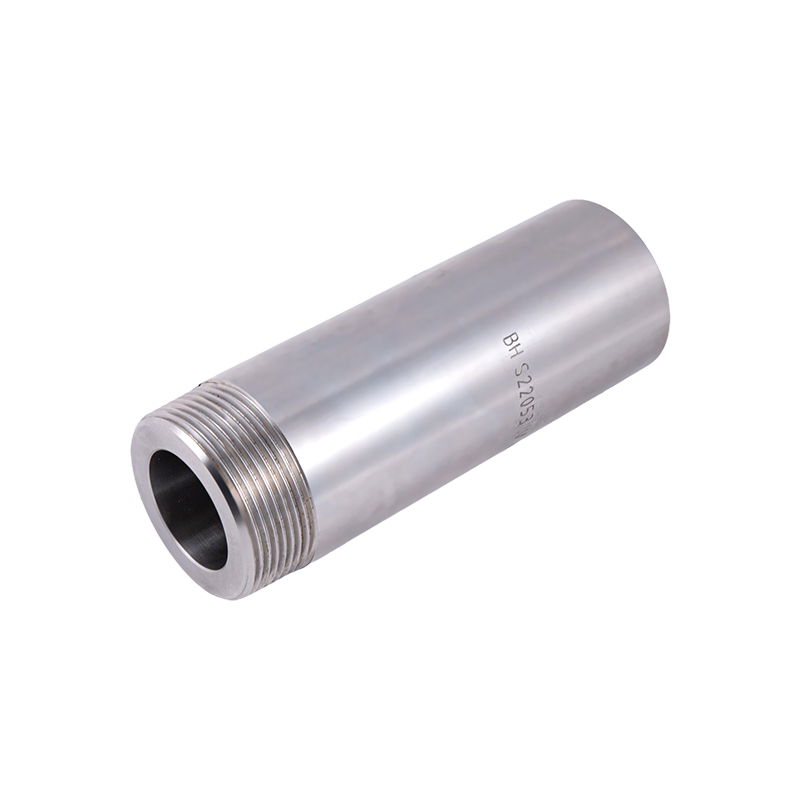
For extreme environments — concentrated acids, high-temperature oxidizing service, or cryogenic applications — duplex stainless (2205) or higher-alloyed grades may be appropriate, though these require early specification to avoid procurement delays.
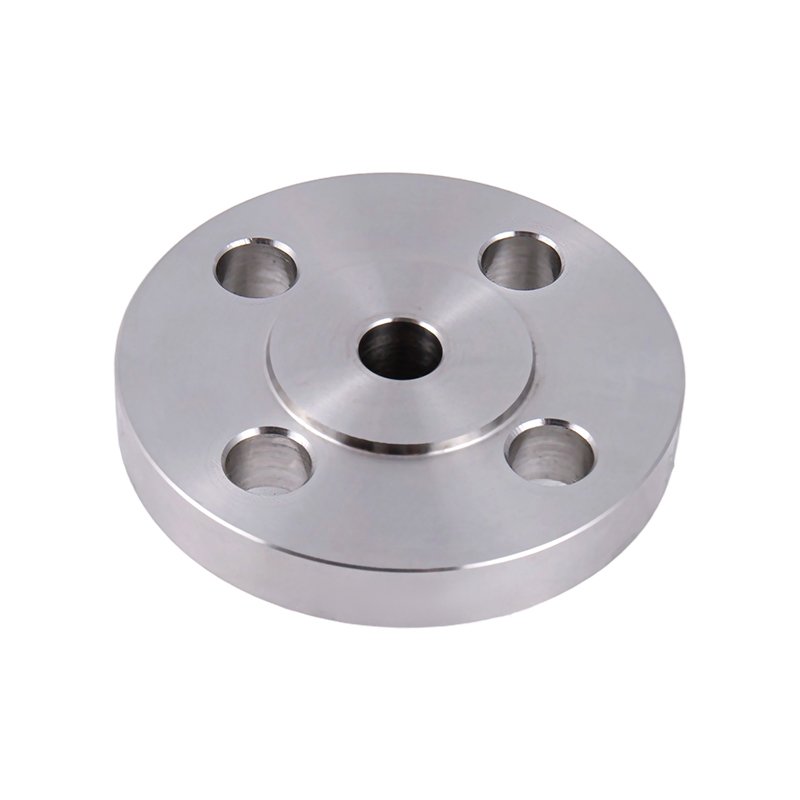
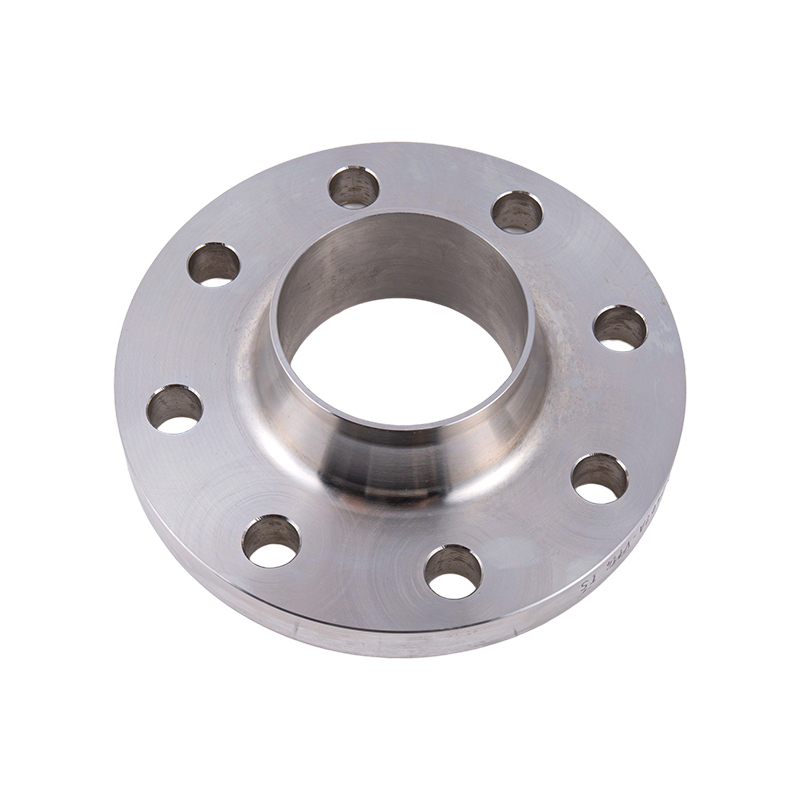
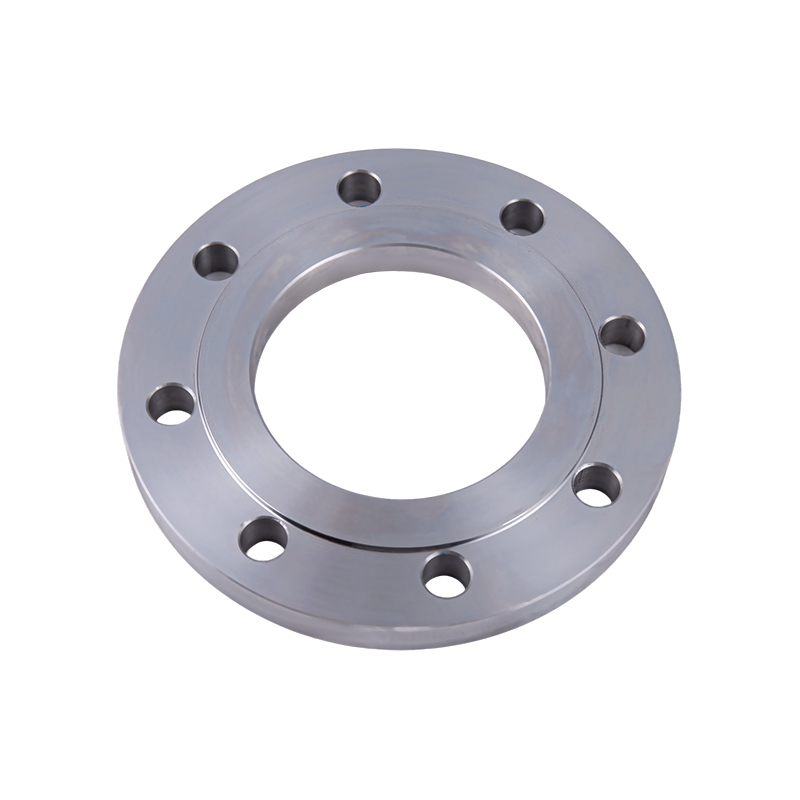
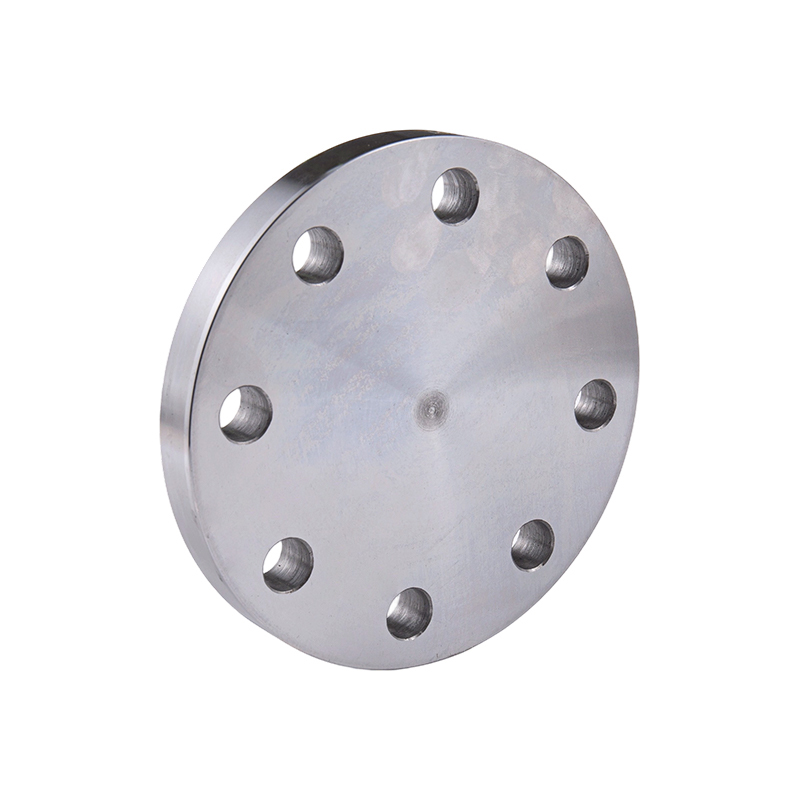
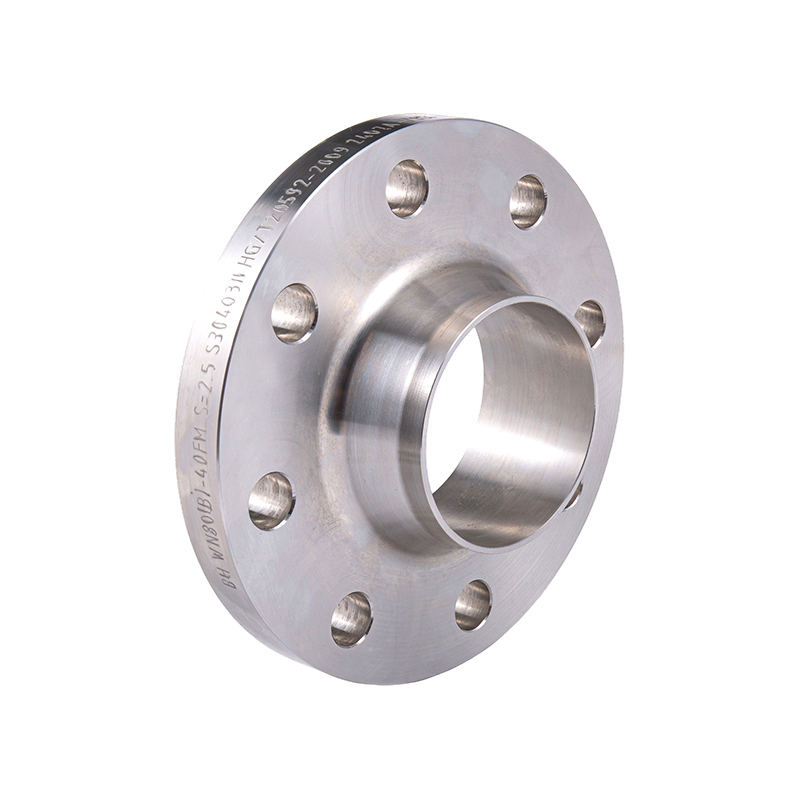
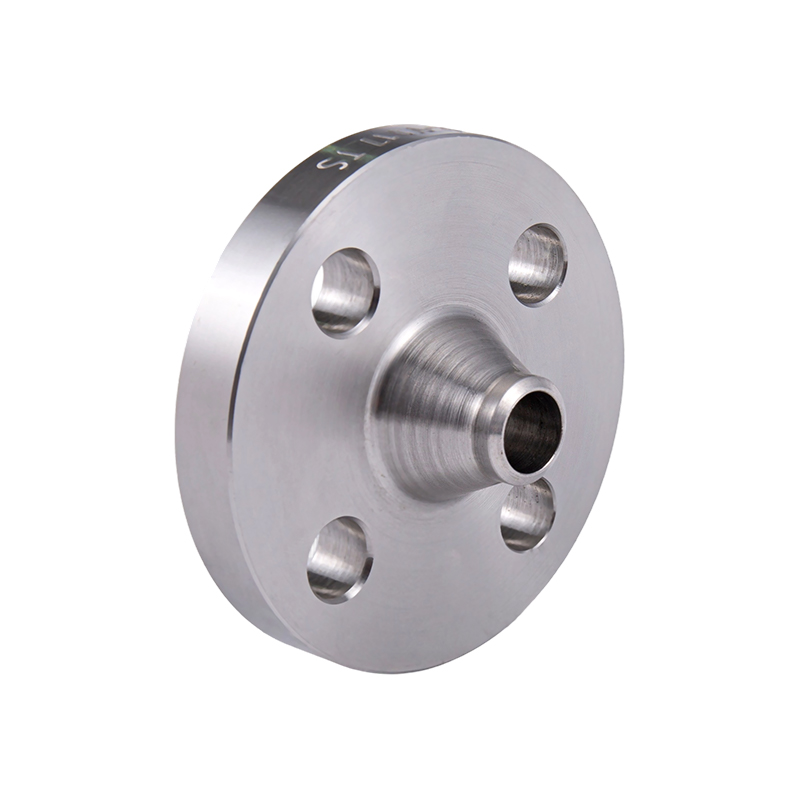
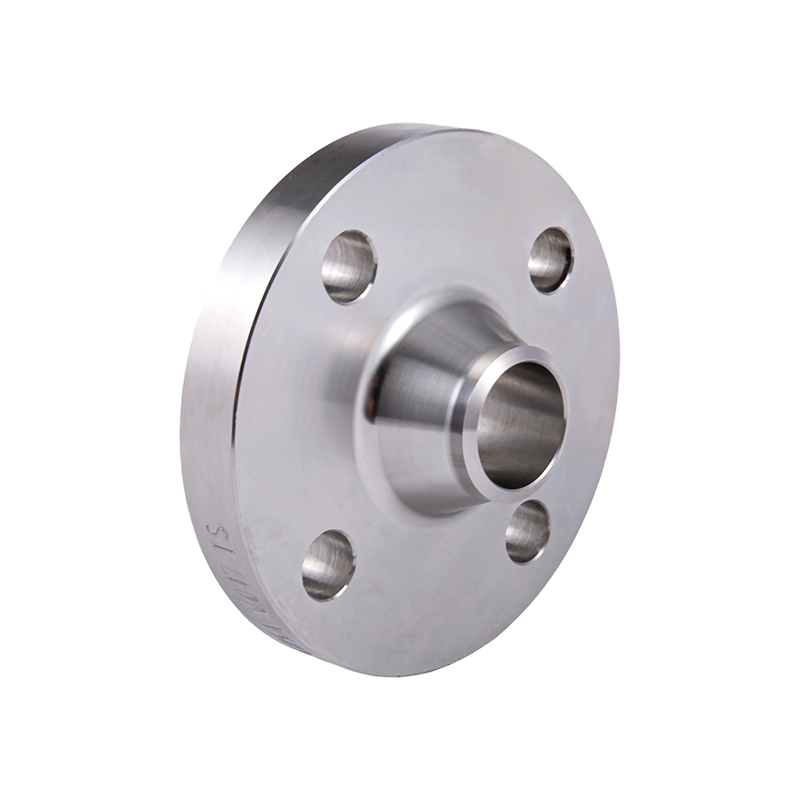
The complete range of flanged pipe fittings from Baihui covers both 304 and 316 series in standard and custom dimensions, with face types and pressure ratings matched to ASME B16.5, DIN EN 1092, and JIS B2220 requirements.
Carbon steel flanged fittings occupy a different part of the selection matrix — not because they are inferior to stainless, but because they are optimized for a different set of conditions. Where the service medium is non-corrosive or the system relies on protective coatings or cathodic protection, carbon steel delivers higher tensile strength, better weldability, and significantly lower material cost.
ASTM A105 is the benchmark carbon steel grade for forged flanges and fittings, covering pressure ratings from Class 150 through Class 2500. It provides a minimum tensile strength of 485 MPa and yield strength of 250 MPa, making it suitable for high-pressure steam lines, hydrocarbon pipelines, and compressed gas systems where mechanical loads govern the design rather than corrosion.
Carbon steel short type flanged fittings are the standard specification in:
One practical advantage of carbon steel in short-dimension fittings: its higher yield strength allows thinner walls at equivalent pressure ratings, partially offsetting the reduced length. For high-pressure Class 900 or Class 1500 applications, this can be the deciding factor between a fitting that fits within the available envelope and one that doesn't.
The sealing reliability of a flanged connection depends on three variables working together: flange face flatness, gasket selection, and bolt load distribution. In short type fittings, the reduced pipe length means the flange faces are closer to welds or stress concentrations that could introduce distortion — making dimensional control during manufacturing more critical than in standard-length fittings.
Raised face (RF) flanges are the most common sealing configuration for short type flanged pipe fittings in industrial service. The raised face concentrates bolt load onto a smaller area, increasing gasket seating stress and improving seal reliability at elevated pressures and temperatures. For highly corrosive media or vacuum service, ring type joint (RTJ) faces provide metal-to-metal sealing that eliminates reliance on elastomeric gaskets entirely.
Bolt load is the factor most often responsible for in-service leaks that were not present at installation. Thermal cycling causes differential expansion between the flange material and the bolts, which gradually relaxes the clamping force. Specifying the correct bolt material — typically ASTM A193 B7 studs with A194 2H nuts for carbon steel flanges, or A193 B8M for stainless — and following a calibrated torque sequence at installation prevents this relaxation from becoming a leak over the first operational cycle.
For compact installations where access for re-torquing is limited after initial assembly, using spiral-wound metallic gaskets rather than compressed fiber gaskets provides better resilience against bolt load relaxation, retaining sealing force through a wider range of temperature excursions.
The maintenance argument for flanged connections over welded joints is straightforward: a welded connection requires cutting, weld removal, and re-welding to access downstream components. A flanged connection requires unbolting. In processes that require regular inspection, cleaning, or component replacement — heat exchangers, pumps, strainers, control valves — the time difference between these two approaches is measured in hours versus days, with a corresponding difference in process downtime cost.
Short type flanged fittings extend this advantage to installations where standard spool pieces would have been replaced with welded connections due to space constraints. By providing a bolted joint in the minimum possible face-to-face dimension, they preserve maintainability in locations where it would otherwise be sacrificed to physical limitations.
Disassembly planning should be part of the initial specification. Key considerations include:
Short type flanged fittings are available in both forged and cast versions, and the difference in performance is not marginal. Forging works the metal under controlled compressive force, aligning the grain structure with the geometry of the finished part and eliminating the porosity, shrinkage cavities, and segregation that are inherent in casting. The result is a fitting with higher tensile and fatigue strength per unit of wall thickness — directly relevant to a component whose compact geometry provides less material cross-section to carry mechanical and pressure loads.
For pressure-retaining fittings, ASME standards draw a clear line: forged fittings are the appropriate specification for flanged components in Class 150 through Class 2500 service. Cast fittings are accepted in lower-pressure utility service but are not preferred where cyclic loading, vibration, or high-temperature differential expansion applies — all conditions common in chemical processing, oil and gas, and power generation installations.
Jiaxing Baihui Machinery has specialized in precision forging since 2007, producing flanges and flanged fittings from stainless steel, carbon steel, and alloy steel with an annual capacity of 20,000 tonnes. Operations are certified to ISO 9001, CE, and Russia CUTR032, covering the major qualification requirements of international procurement specifications. The standard and non-standard forged flanges produced at Baihui's facility in Zhejiang Province are manufactured on the same equipment and to the same dimensional standards as the short type flanged fitting range — providing consistent interchangeability across a complete piping system built from Baihui components.
For technical specifications, material certifications, or OEM supply inquiries, contact Baihui Machinery directly.
Products
Contact info.
+86-573-8553-5198
+86-136-1655-8299
+86-573-8553 5198
No. 207, Chuangye Road, Zhapu Town, Pinghu City, Zhejiang Province, China
QR Code
 Forged Stainless Steel Flanges Suppliers